Ferritin, Why It Matters
You may have heard, “Your iron is normal,” but still feel exhausted, cold, foggy, or notice increased hair shedding.
One piece of the puzzle may be Ferritin.
Ferritin gives us information about your body’s stored iron—and those iron reserves are important for energy, oxygen delivery, brain function, muscle performance, and healthy hair growth.
What Exactly Is Ferritin?
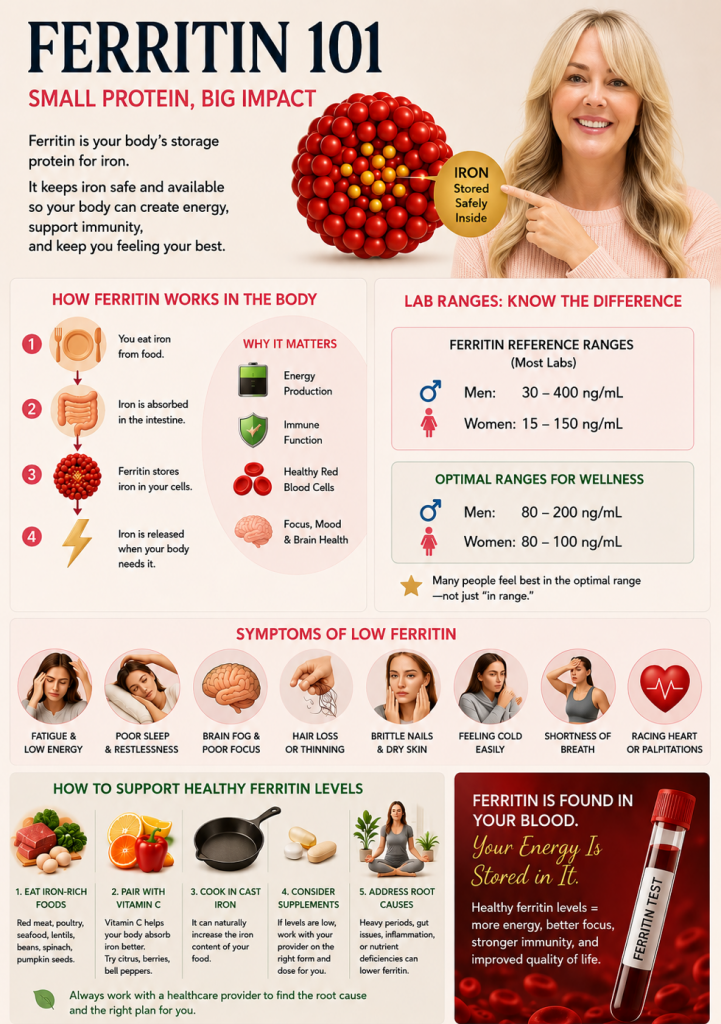
Think of Ferritin as your body’s iron storage tank.
When you eat iron-containing foods, iron is absorbed through your digestive tract. Some is immediately used, while some is safely stored inside Ferritin molecules.
When your body needs additional iron, it can draw from these reserves.
The process looks something like this
Iron from food → Absorption in the intestine → Transported through the blood → Stored as Ferritin → Released when your body needs iron.
Your body uses iron to make Hemoglobin, the protein in red blood cells responsible for carrying oxygen throughout your body.
This is why you can sometimes have a hemoglobin level that is still within the laboratory reference range while your Ferritin and iron reserves are already running low.
Why Does Ferritin Matter?
Healthy iron stores support many important functions, including:
- Energy production
- Red blood cell and hemoglobin production
- Oxygen delivery
- Healthy hair growth
- Brain function, memory, and concentration
- Muscle function and exercise tolerance
- Normal immune function
- Thyroid-related enzyme function
When iron reserves become depleted, your body may begin showing symptoms before traditional anemia develops.
Understanding Ferritin Lab Ranges
Ferritin is measured with a blood test and is typically reported as ng/mL.
Reference ranges vary considerably depending on the laboratory, age, sex, and clinical situation. Many laboratories use ranges roughly around:
Women: 15–150 ng/mL
Men: 30–400 ng/mL
But being inside a laboratory reference range doesn’t automatically tell us whether your iron status is appropriate for you.
What About “Optimal” Ferritin?
There is no universally established optimal Ferritin range for every person.
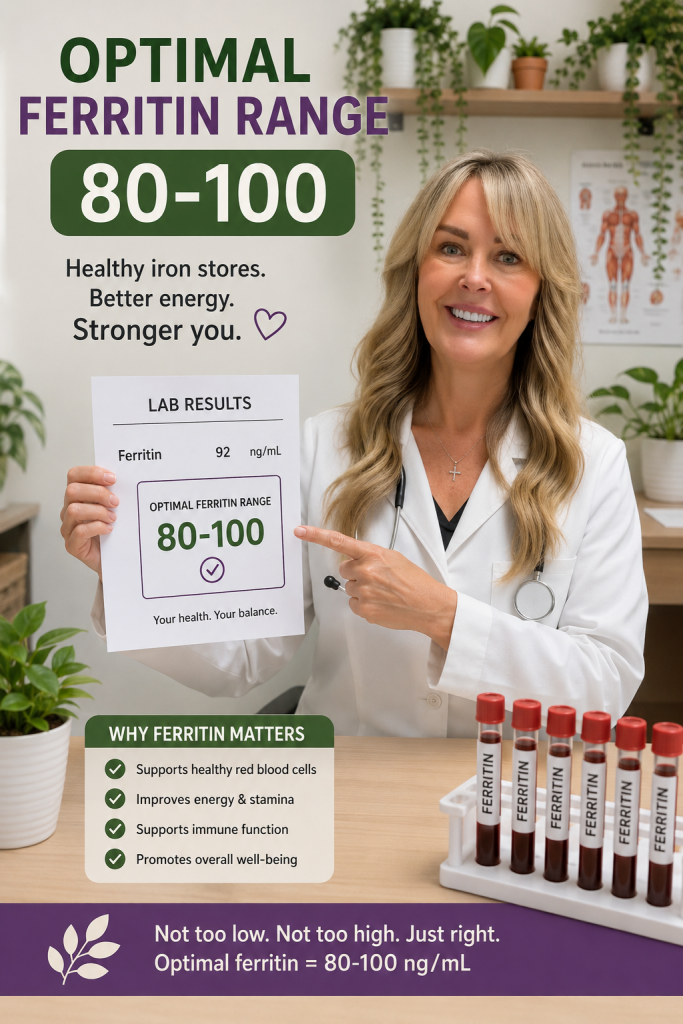
In clinical practice, some providers may aim for Ferritin levels around 80-100 ng/ml in certain patients, particularly when evaluating iron deficiency and related symptoms. However, a target should be individualized rather than treating everyone to the same number.
Ferritin should ideally be interpreted alongside:
CBC • Hemoglobin • Hematocrit • Serum Iron • TIBC/Transferrin • Transferrin Saturation
Inflammation also matters because Ferritin is an acute-phase reactant. Infection, inflammation, liver disease, and other conditions can raise Ferritin and potentially make iron stores appear better than they actually are.
What Does Low Ferritin Feel Like?
Low iron stores may contribute to symptoms such as:
- Persistent fatigue or low energy
- Hair shedding or thinning
- Brain fog
- Difficulty concentrating
- Feeling cold easily
- Headaches
- Dizziness or lightheadedness
- Reduced exercise tolerance
- Shortness of breath with activity
- Muscle weakness
- Restless legs
- Brittle nails
- Rapid heartbeat or palpitations
You do not necessarily have to be anemic to experience symptoms associated with iron deficiency.
Why Does Ferritin Become Low?
This is an important question because simply taking iron doesn’t always address why your iron stores became depleted in the first place.
Common contributors include:
Heavy menstrual cycles — One of the most common reasons for iron depletion in menstruating women.
Low dietary iron intake — Particularly when the diet contains little heme iron.
Poor absorption — Celiac disease, gastrointestinal disorders, bariatric surgery, or other digestive issues can interfere with iron absorption.
Blood loss — Gastrointestinal bleeding and frequent blood donation can gradually deplete iron stores.
Pregnancy — Iron requirements increase substantially during pregnancy.
When Ferritin remains low despite supplementation, investigating the underlying cause becomes especially important.
How Can You Support Low Ferritin?
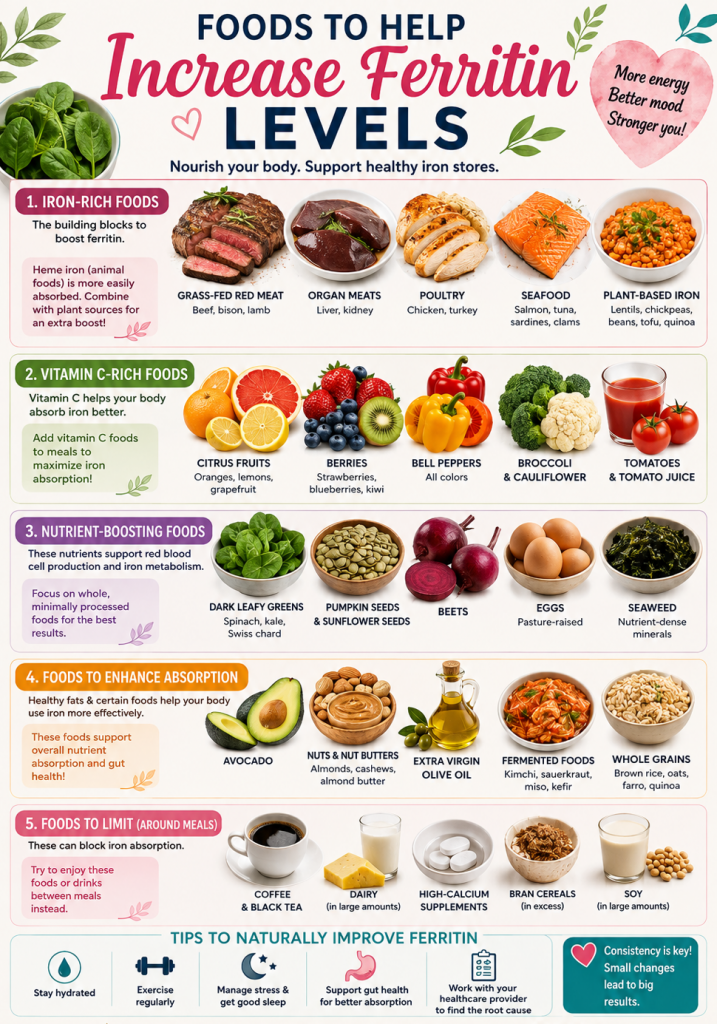
1. Eat More Iron-Rich Foods
Good sources include:
Heme iron:
Beef • Poultry • Seafood • Organ meats
Plant-based iron:
Lentils • Beans • Spinach • Pumpkin seeds • Tofu • Iron-fortified foods
Heme iron from animal foods is generally absorbed more efficiently than non-heme iron from plants.
2. Pair Iron With Vitamin C
Vitamin C can significantly improve the absorption of non-heme iron.
Try pairing iron-containing foods with:
Bell peppers • Citrus • Kiwi • Strawberries • Broccoli • Tomatoes
3. Pay Attention to What You Take With Iron
Coffee, tea, calcium supplements, and some medications can reduce iron absorption when consumed around the same time.
Spacing these away from iron-rich meals or iron supplements may help when clinically appropriate.
4. Consider Iron Supplementation When Appropriate
If testing confirms iron deficiency, supplementation may be recommended.
But more iron isn’t always better.
Iron supplements can cause constipation, nausea, and gastrointestinal discomfort, and excessive iron can be harmful. The appropriate form and dose should be based on your labs, symptoms, medical history, and underlying cause.
5. Find the Root Cause
If your Ferritin keeps dropping, ask why.
Replacing iron without addressing heavy bleeding, gastrointestinal blood loss, inadequate intake, or poor absorption may only provide a temporary solution.
Your Ferritin Is More Than Just a Number
When someone is struggling with fatigue, hair loss, brain fog, feeling cold, or reduced stamina, Ferritin is one of the markers worth considering as part of a comprehensive evaluation.
Instead of simply asking:
“Is my Ferritin in the normal range?”
A better question may be:
“What do my Ferritin and complete iron studies tell us about my iron status—and why are my levels low?
At Radiant Integrative Health & Wellness, we believe in looking beyond an isolated laboratory number and investigating the factors that may be contributing to how you actually feel.
Get to the root cause. Restore your reserves. Get back to feeling your best. Call 702-333-8458 for a consultation, ongoing support & guidance.