

Cortisol 101
Before you can change the pattern, you need to understand what you’re actually dealing with.
And the first thing to understand is this: Cortisol is not your enemy.
In the right context, cortisol is a survival masterpiece. It’s the hormone that floods your system when you need to act fast — when you need to sprint, fight, or get out of danger. It raises your blood sugar almost instantly so your muscles have fuel. It sharpens your focus. It temporarily shuts down “non-essential” functions — like digestion, reproduction, and immune response — so every ounce of energy can go toward getting you to safety.
It’s remarkable, actually. Your body’s ability to mobilize resources in a crisis is extraordinary.
Understanding that it is made to be only Temporary
The entire cortisol system was designed for acute stress — with recovery built in. You sense danger. Cortisol floods in. You run. You reach safety. Cortisol drops. Your body exhales, resets, and returns to baseline. The whole system works beautifully — when the threat has an ending.
Here’s the problem with modern life: the threat never ends.
Cortisol, Hormones & Weight Gain: What’s Really Happening?
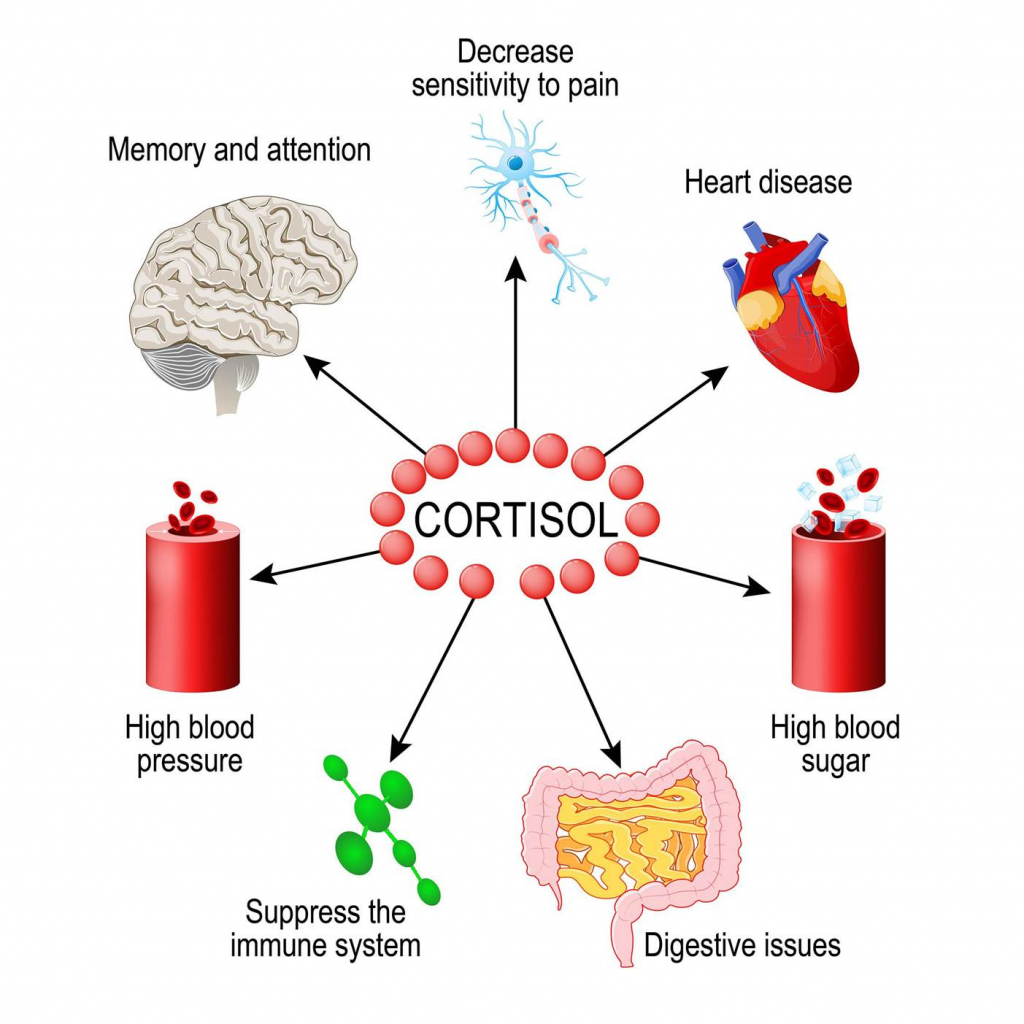
Cortisol is often called the “stress hormone,” but its role goes far beyond stress. Produced by the adrenal glands, cortisol helps regulate metabolism, blood sugar, inflammation, and your sleep-wake cycle. When it’s balanced, it supports energy, focus, and resilience. When it’s chronically elevated—or too low—it can disrupt hormones and contribute to stubborn weight gain.
How Cortisol Affects Your Hormones
Cortisol is part of a complex hormonal network. When it becomes dysregulated, it can impact several key systems:
1. Thyroid Function
- High cortisol can suppress thyroid signaling
- Leads to fatigue, slower metabolism, and difficulty losing weight
2. Sex Hormones (Estrogen & Progesterone)
- Chronic stress “steals” resources from progesterone production
- Can contribute to estrogen dominance → PMS, mood swings, heavy cycles
3. Insulin & Blood Sugar
- Cortisol raises blood sugar to prepare for “fight or flight.”
- Over time → insulin resistance → increased fat storage
4. DHEA (Anti-Aging Hormone)
- Long-term stress lowers DHEA
- Impacts resilience, energy, and overall hormone balance
Cortisol & Weight Gain: Why It Happens
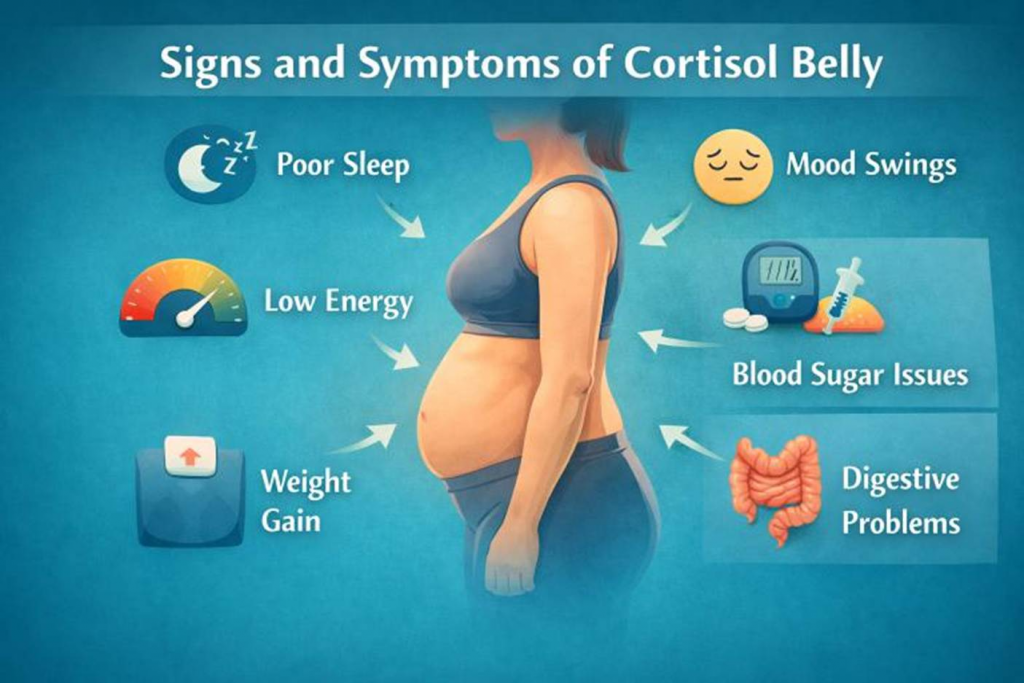
When cortisol stays elevated, the body shifts into survival mode. This directly impacts weight in several ways:
Increased Belly Fat
Cortisol promotes fat storage—especially around the abdomen (visceral fat), which is linked to metabolic risk.
Blood Sugar Spikes → Cravings
Frequent cortisol spikes lead to unstable blood sugar, increasing cravings for sugar and carbs.
Muscle Breakdown
High cortisol can break down muscle tissue, and less muscle can affect slowing metabolism over time.

Sleep Disruption
Elevated nighttime cortisol interferes with sleep, which further worsens weight gain and hormone imbalance.
Leptin Disruption: Cortisol suppresses your sensitivity to leptin — the hormone that signals “I’m full.” When leptin stops working, the off-switch for hunger disappears entirely.
That last one is critical. Leptin is your body’s “enough” signal. When cortisol corrupts it, you can eat a full meal and still feel like something is missing. You’re not being dramatic. The signal isn’t arriving.
When cortisol is chronically high, your body’s fat thermostat gets stuck on “store.” It doesn’t matter how small your lunch was. The setting doesn’t change based on what you eat. It changes based on what your nervous system believes about your safety.

The Cortisol Clock — How Morning Sets the Tone for Everything
Your body runs on a schedule. A very precise, very elegant biological schedule that has been refined over hundreds of thousands of years of human evolution.
And cortisol is one of its most important timekeepers.
Here’s something most people don’t know: cortisol is supposed to spike in the morning. In fact, there’s a specific term for it — the Cortisol Awakening Response, or CAR. About 20 to 30 minutes after you open your eyes, your cortisol naturally surges. This is healthy. This is your body doing exactly what it should do.
That natural morning peak is your internal alarm system — the biological equivalent of your body saying, “Okay, it’s time. Let’s get moving.” It sharpens your focus, mobilizes your energy, and prepares your metabolism for the demands of the day ahead.
After that peak, cortisol is designed to gradually decline throughout the day. By evening, it should be at its lowest point. That drop in cortisol is what signals your body to shift out of high-alert mode and into rest, repair, and recovery. It’s what allows you to wind down, sleep deeply, and wake up restored.
That’s the ideal arc. And it’s genuinely beautiful when it works.
Here’s what goes wrong.
When you pile on additional stress triggers before that natural morning peak has even finished — the jarring alarm, the anxious phone scroll, the skipped breakfast, the panicked commute — you are stacking artificial cortisol spikes on top of the natural one.
Instead of one clean peak followed by a gradual decline, your cortisol curve looks more like a jagged mountain range. It spikes, partially drops, spikes again, partially drops, spikes again. It never fully resolves.
Signs Your Cortisol May Be Imbalanced
- Persistent fatigue (especially “tired but wired”)
- Weight gain, especially in the midsection
- Sugar or salt cravings
- Anxiety, irritability, or mood swings
- Poor sleep or waking between 2–4 AM
- Hormonal symptoms (PMS, low libido, irregular cycles)
How to Support Healthy Cortisol Levels
1. Stabilize Blood Sugar
- Prioritize protein, healthy fats, and fiber at every meal
- Avoid skipping meals or relying on caffeine
2. Support Your Nervous System
- Daily stress-reducing practices (walking, breathwork, prayer/meditation)
- Even 10 minutes can lower cortisol
- Calm / Recovery / Nervous System Regulation
3. Improve Sleep Quality
- Aim for 7–9 hours
- Limit screens at night, keep a consistent sleep schedule
4. Exercise Smarter
- Avoid excessive high-intensity workouts if already stressed
- Incorporate strength training and low-impact movement
5. Targeted Nutritional Support
- Magnesium (calming, supports sleep)
- Adaptogens (ashwagandha, rhodiola)
- Omega-3 fatty acids
- B vitamins for adrenal support
The Bottom Line
Cortisol is not the enemy—it’s essential for survival. But in today’s high-stress world, chronic cortisol imbalance is one of the most overlooked drivers of hormone disruption and weight gain. Addressing stress physiology—not just calories or exercise—is often the missing piece in achieving sustainable health and metabolic balance.
If you’re experiencing ongoing symptoms, it’s not something to ignore. It’s a signal that your body may need support—often at a deeper, root-cause level.
Conclusion
At Radiant Integrative Health, we understand that imbalances can affect more than just your physical health. This shift can have a profound impact on your health and overall well-being. If you are struggling with any ongoing issues and looking for support lets talk, give us a call or text us at 702-333-8458.

Radiant Integrative Health – Age Happier Live Healthier